Concrete contractor in Mountain View, CA - driveways and patios that sit flat and drain
Vertex Sunnyvale Concrete is a concrete contractor based in Sunnyvale that pours driveways, patios, walks, steps and foundations for homes and small properties in Mountain View, with the base, joints and drainage built right underneath.
- Licensed and insured.
- Free in-person estimates.
- Replies within 1 business day.
Mountain View homes and what's under their driveways
Most of what we pour in Mountain View is for homes, with some for small apartment buildings and shops. The neighborhoods on either side of Castro Street are some of the oldest in town, mostly built from the late 1800s up to World War II. Around them you'll find postwar ranch houses, townhomes and newer rebuilds, a lot like the ones we work on next door in Los Altos and Palo Alto.
On the older lots we usually find a driveway that's been patched more than once over a big tree's roots, so the job starts with how the old concrete comes out and what we build underneath.
Concrete work we do on Mountain View properties
Concrete driveway building
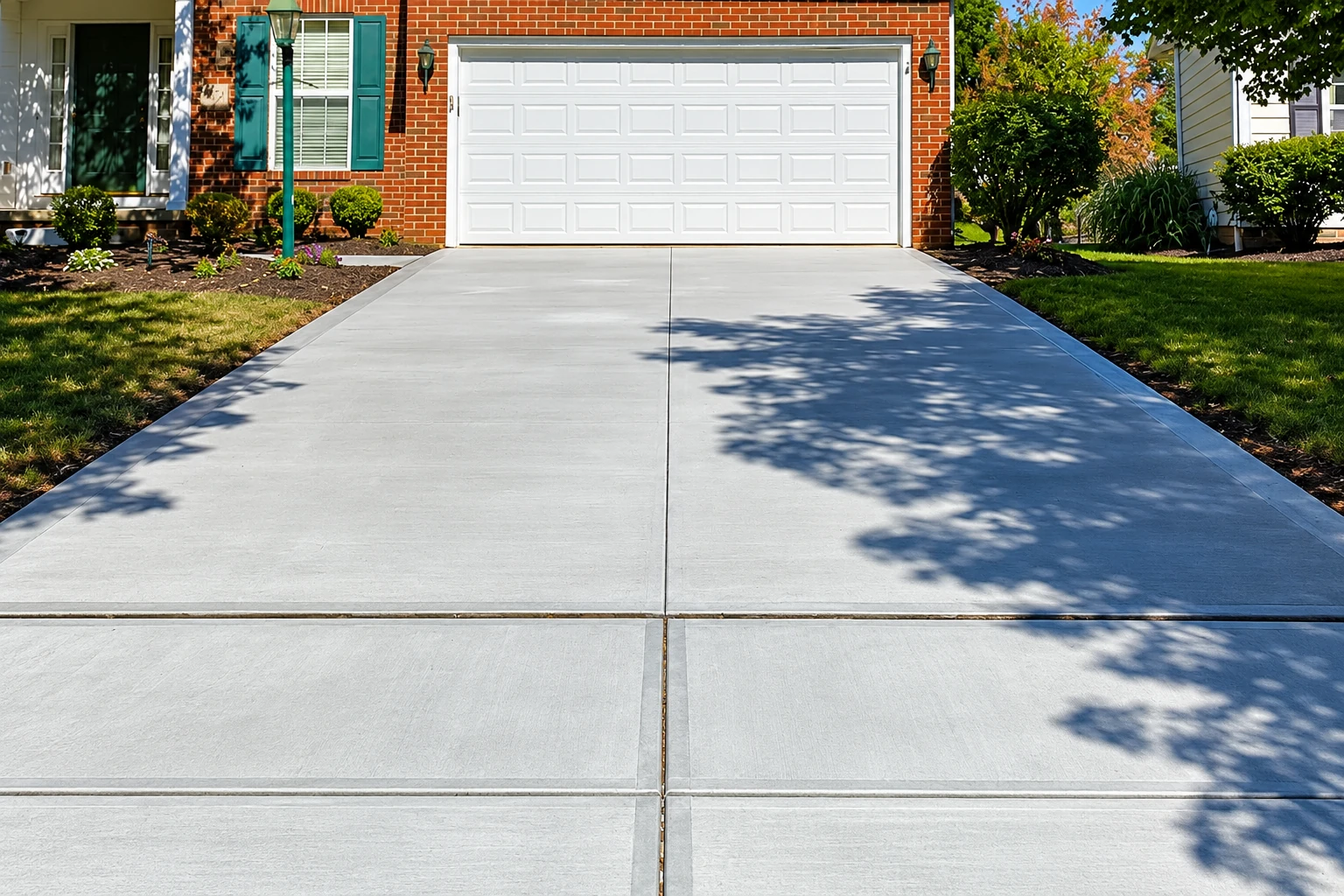
When an older Mountain View driveway has heaved over roots or sunk at the garage, we tear it out, rebuild the base and pour a new slab.
Concrete patio construction
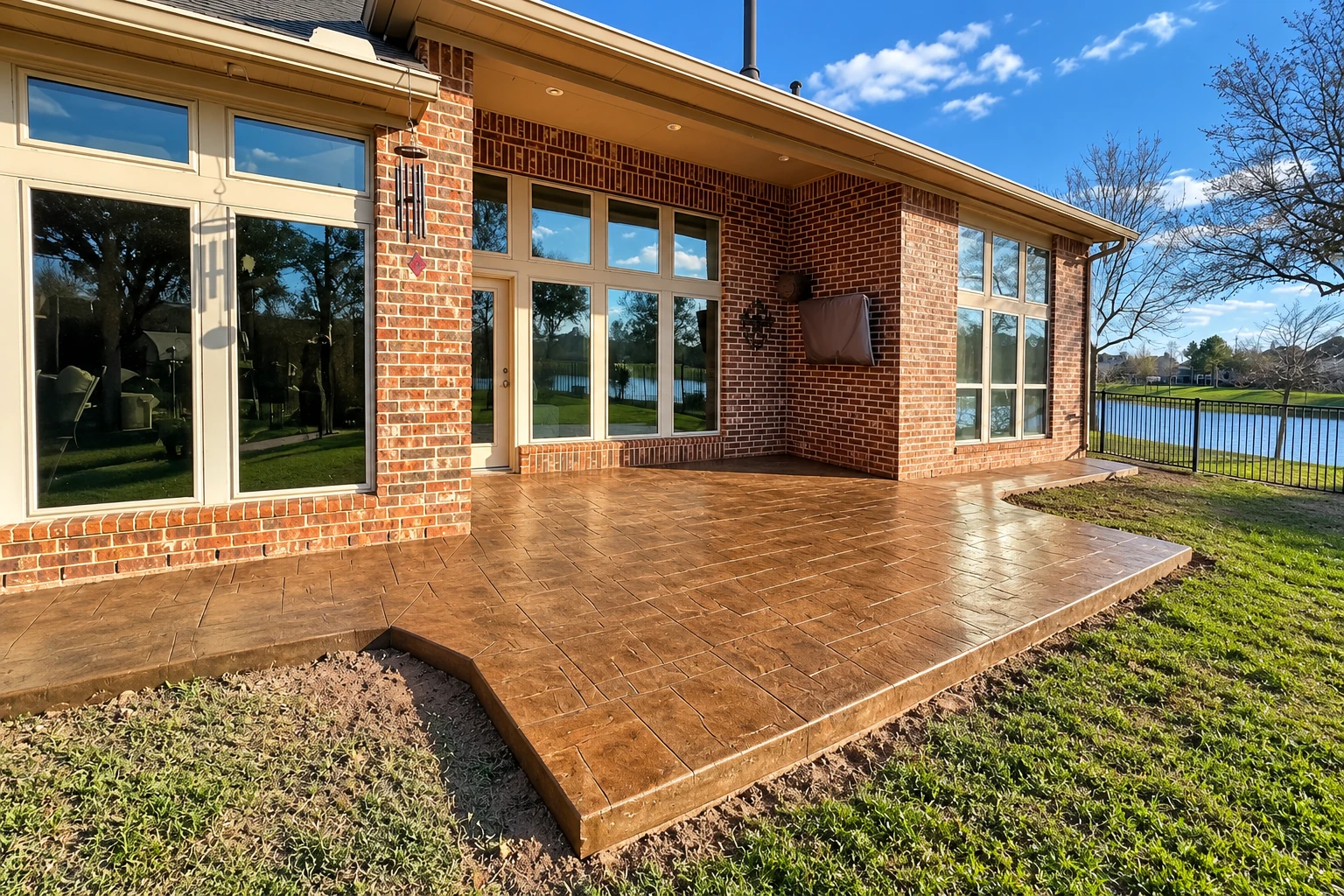
Plenty of backyards here are small, so we lay out a patio that fits how you'll use it and slopes water away from the house.
Stamped concrete services
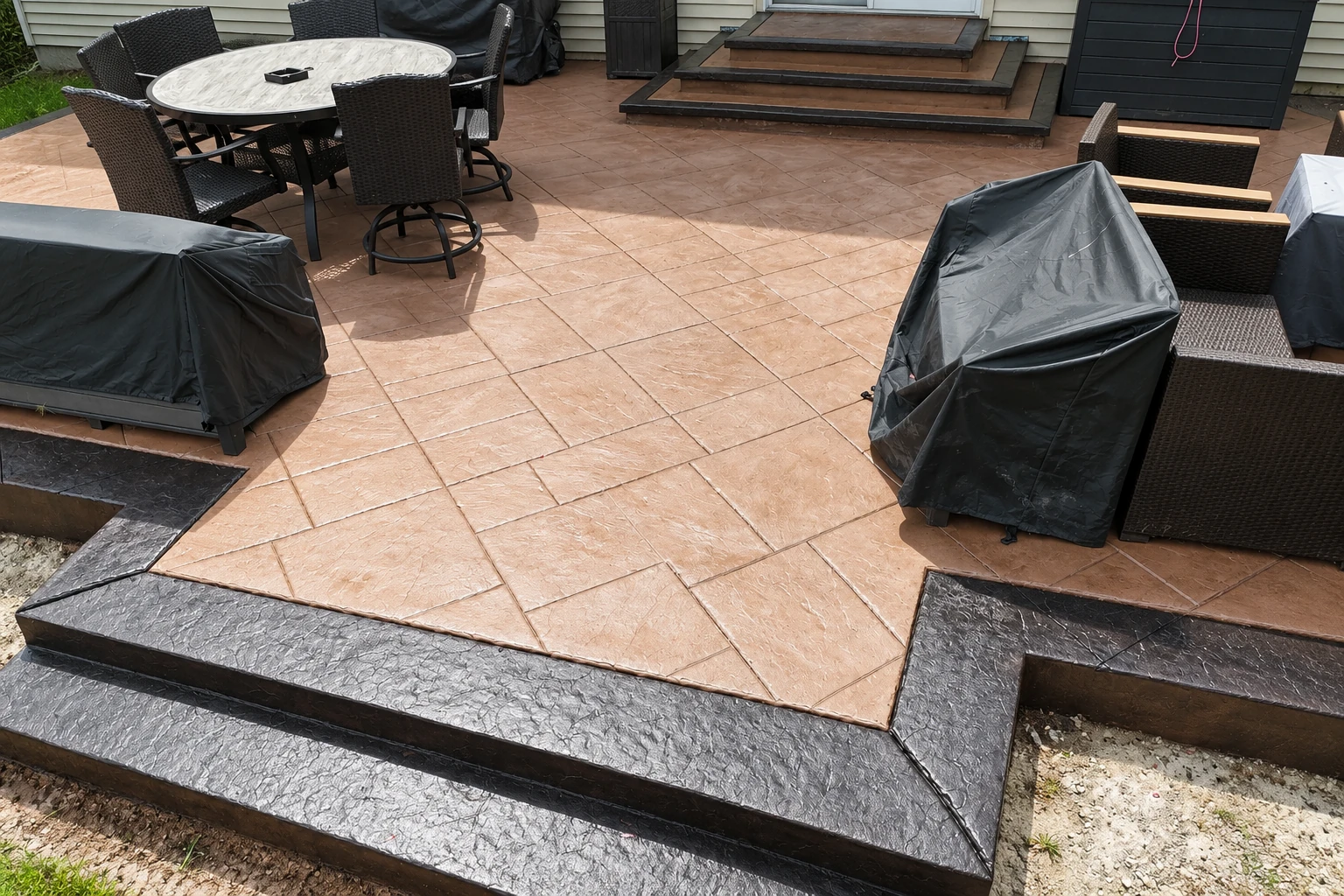
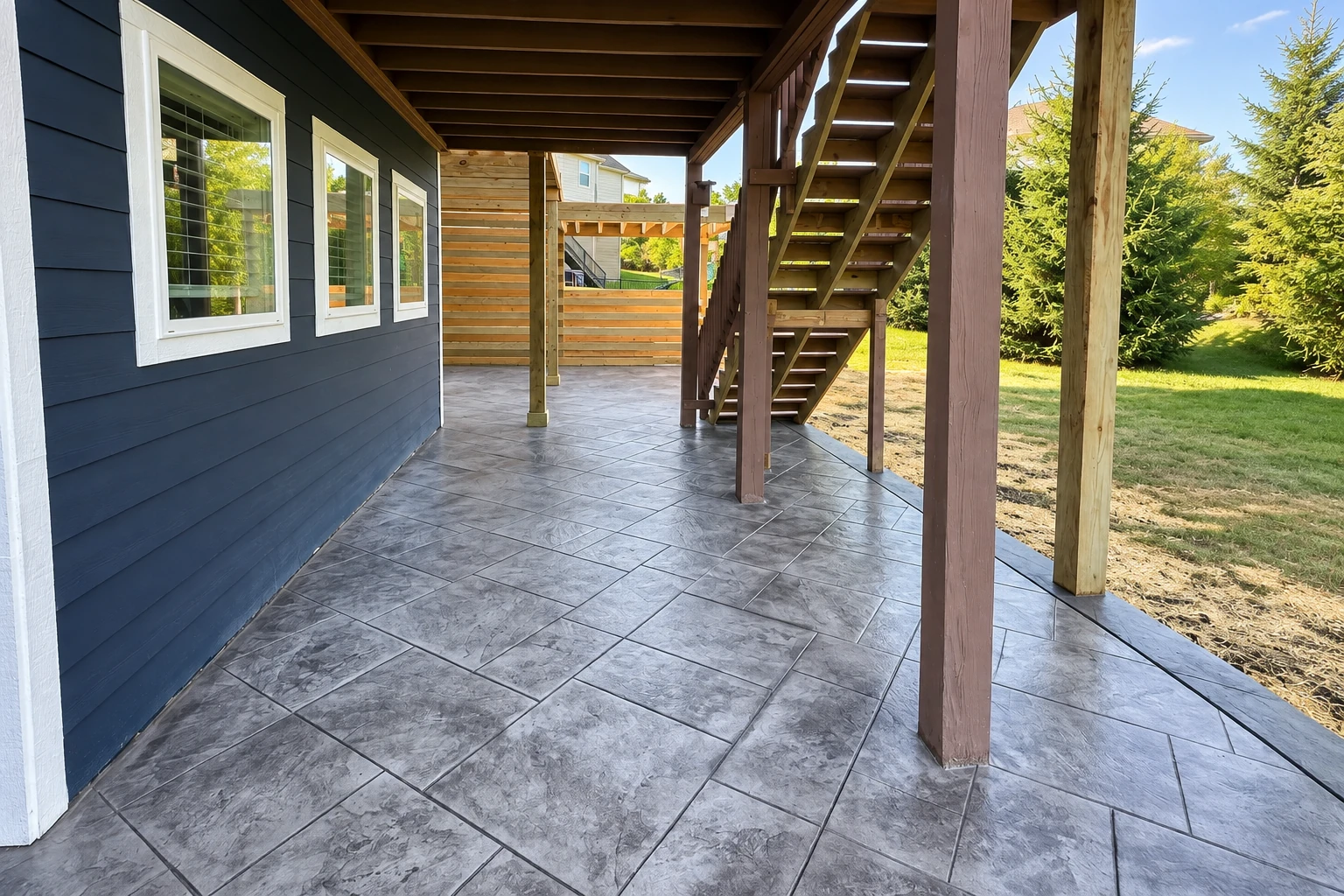
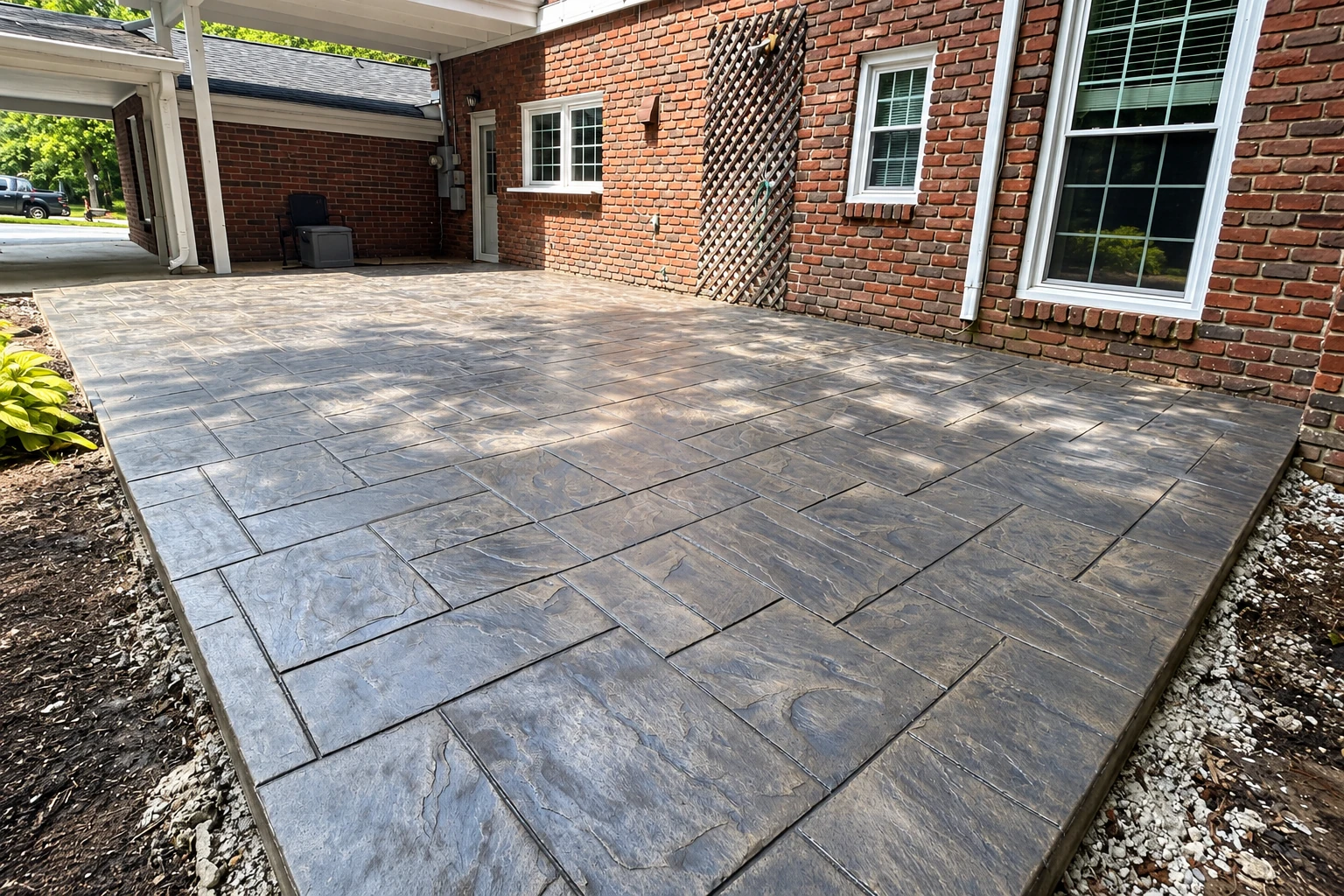
Stamped concrete gives a front walk or patio the look of stone or brick in one pour, and it suits the older homes near downtown well.
Concrete sidewalk building
Walks lifted by street trees are a trip hazard we see all over town, and we replace the broken panels with a packed base and properly cut joints.
Garage floor concrete
Older detached garages here often have a cracked, oil-stained floor that's settled at one end, and we break it out and pour a new, level slab.
Decorative concrete
Colored, exposed-aggregate or scored finishes can match a remodeled house or an older one, and we'll show you samples before you pick.
Concrete retaining walls
Where a yard steps down or a slope pushes toward a patio or driveway, a concrete wall holds the ground back, and we build drainage behind it.
Concrete floor installation
For an addition, a garage conversion or a small shop in town, we pour interior floors flat enough for the tile, wood or polish going on top.
Concrete pool decks
Decks around older backyard pools tend to crack and lift along the edge, and we replace them with a slip-resistant finish that drains off quickly.
Concrete steps construction
Front steps on older homes often pull away from the porch or vary in height, so we rebuild them even and set them on a solid footing.
Slab foundation building
When you're adding a room, a backyard cottage or a new home on a Mountain View lot, we form and pour the slab foundation it sits on.
Foundation installation
For a teardown rebuild or a raised-floor addition, we pour the perimeter foundation to the plans so the framing starts square and level.
Concrete parking lot building
Small apartment buildings and storefronts around town need lots that hold up to traffic, so we pour thicker slabs over a deeper base and plan where water goes.
Concrete footings
Patio covers and deck posts on older lots often sit on small, shallow footings, the pads that carry the weight, so we dig and pour new ones.
Foundation raising
When part of an older house has settled and doors stick or floors slope, we lift and support that section, which can save rebuilding the whole foundation.
Concrete cutting
On remodels here we saw-cut door openings, plumbing trenches and clean edges where old concrete meets new, using water to keep the dust down.
Get a free on-site estimate for your Mountain View concrete
Send the form and we'll get back to you within one business day to set a time. I come out myself, look at the site and give you a written estimate, free and with no obligation.
- Based in
- Sunnyvale, CA 94087
- Hours
- Mon–Fri: 6 AM–11 PM, Sat–Sun: 7 AM–11 PM
Working in Mountain View: permits, licenses and price
In Mountain View, permits go through the city's building office, which handles permit review and plan check. When a concrete job needs a permit, that review has to clear before we can put a pour date on the calendar. We check with the city on what your project needs before we schedule anything, and if it calls for a permit, we pull it, handle the paperwork and meet the inspector on site. When you're comparing contractors, ask about two things, a California contractor's license and a Mountain View business license, which the city requires of anyone doing construction work in town. We're licensed and insured, and I'll gladly go over it when I'm out.
The price here mostly comes down to how much old concrete comes out, how much base work the ground needs once it's open, the size and thickness of the slab and the finish you pick. Tight side yards between houses can mean more hand work, too. The schedule turns on the permit, if there is one, and on curing, the slow hardening time before you can use the slab. Your written estimate gives you the figure for your own job. A lot of the housing here looks like what we pour for in Sunnyvale and Santa Clara, so the same crew and the same base work come with us.
Why concrete here cracks, sinks and holds water
Tree roots and thin bases are behind most of the cracked, uneven driveways and walks we see here, because a slab poured on raked dirt settles with the dirt and roots lift whatever's left. We dig out to firm ground and pack a proper subgrade, the layer the slab sits on. Then we add rebar, the steel that keeps a crack from opening up, and cut control joints, grooves that give the concrete a straight place to crack, before it can crack on its own. I learned on a city crew, fixing sidewalks that roots had broken, that a slab is only as good as what's under it. So if the budget's tight, I'd spend it on the base before a fancy finish, because you see the finish on day one but the base is what keeps it flat.
Pooling water is the other call we get, usually from a driveway or patio that's settled until it tips toward the garage or the house. Before we form anything, we check where your water runs and set the new slab to carry it away. A broom finish, the light texture you see on most driveways, keeps it from getting slick when it's wet.
How a concrete job goes when you call us in Mountain View
From your first call to the final walk-through, here's what happens on a Mountain View job and what you'll have in hand at each step.
Call or send us a message
Call (669) 348-0343 or use the form and tell me what's going on, whether it's a sunken driveway or a new patio. I'll set up a time to come see it.
I look at your site
I come out myself, ask how you'll use the slab, check where your water runs and talk through your choices, and it helps if you're home so we can walk it together. You get a written estimate before anything is scheduled, so you know the cost up front.
We get cleared and pour
If your job needs a permit, it comes before the pour, and the city offers a same-day permit, with no plans needed, for minor projects at single-family homes and duplexes. Then our own crew digs out, packs the base and pours, with me on site checking it as it goes.
We walk the job together
When it's done, we walk the finished work with you and go over how to look after it, starting with keeping weight off while it cures. You'll want to be there for this one.
Questions about concrete work in Mountain View
How do I find out if my concrete project needs a permit in Mountain View?
The city's building office makes that call, and its permit list doesn't name driveways or patios either way, so we check with the city on your project before anything is scheduled. One concrete item the city does spell out is retaining walls. Its list of projects that don't need a permit includes walls 4 feet tall or less, measured from the bottom of the footing to the top of the wall. That doesn't apply when the wall holds up extra load from above, like a driveway or a slope, or holds back certain flammable liquids.
Does a concrete contractor need a state license in California?
Yes, for nearly any concrete job. The state licensing board requires a license when a project needs a building permit, uses any hired workers, or costs $1,000 or more in labor and materials across one or more contracts. Ask anyone you're considering for their license, and we're licensed and insured.
How much does a new concrete driveway cost in Mountain View?
The cost of a Mountain View driveway is set mostly by its size, how much old concrete has to be broken out and hauled off, and how much base the ground needs, and you get your own figure in a written estimate after I see it. Thickness, rebar, a stamped or decorative finish instead of a plain broom finish, tight access and any permit all add to it. Like I said above, if something has to give, I'd go plainer on the finish before skimping on the base.
How long does a new concrete driveway take before I can drive on it?
You'll be walking on it well before you can drive on it, because concrete keeps gaining strength for days after the pour and a car needs more of that strength than your feet do. I give you the dates for your own slab on pour day, since the thickness and the weather both change them, and we'll plan where you park in the meantime.
Will my new concrete driveway crack like the old one?
Some fine cracking is normal because concrete shrinks as it hardens, but it shouldn't break up like the old one when the base, rebar and joints are done the way I described above. Whatever made the old slab fail usually shows once we break it out, and I'll point it out so you can see what we fixed.
Does the weather in Mountain View affect pouring concrete?
It mostly helps, because daytime temperatures here are moderate, often in the fifties and sixties in winter and the seventies and eighties in summer. What we watch for is midday heat on warm days, since concrete that dries too fast on top ends up weak and dusty later. So on hot days we pour early and keep the surface damp while it cures.
Tell us about your Mountain View project
Cracks and sunken spots usually get worse once water gets under the slab, so having me look sooner gives you more choices.